Key Takeaways
- Bilateral trade reached $101.8 billion in 2024, with over 15,000 Chinese companies now operating nationwide.
- Chinese investment concentrates on infrastructure, AI, and green energy, positioning the UAE for knowledge-economy leadership.
- Alignment with the UAE's strategic priorities creates a competitive advantage for both Chinese and global enterprises.
The world’s second-largest economy has become one of the UAE’s most important partners as the Emirates transforms from a petro-state into a leading destination for trade, tourism, and technology.
With China expected to host the second China-Arab States Summit this year, the partnership has become a fixture of the UAE’s economic strategy.
A Partnership 40 Years in the Making
Over the past four decades, the UAE and China have forged bilateral ties that now define both nations' regional strategies. China is the UAE's largest trading partner, and the UAE is China's second-largest trading partner in MENA. In 2024, bilateral trade hit $101.8 billion — roughly 800 times the volume when diplomatic relations were first established in 1984.
Today, over 15,000 Chinese companies operate in the UAE, according to the country's Minister of Economy — roughly twice as many as in 2019. That foothold looks set to deepen: a 2025 PwC report found that 79% of surveyed Chinese enterprises plan to scale up operations in the country.
The Dubai Multi Commodities Centre, one of the city's free-trade zones, is home to more than 1,000 Chinese firms — just 4% of its total enterprises, yet a share that has grown by as much as a quarter annually for each of the past three years, according to The Economist
Technology: From Cloud Computing to AI Infrastructure
Chinese firms have accelerated their investments in technology across the UAE. This ranges from clean energy to smart cities, exemplified by the Twin City Agreement between Abu Dhabi and Shenzhen to share knowledge on urban development.
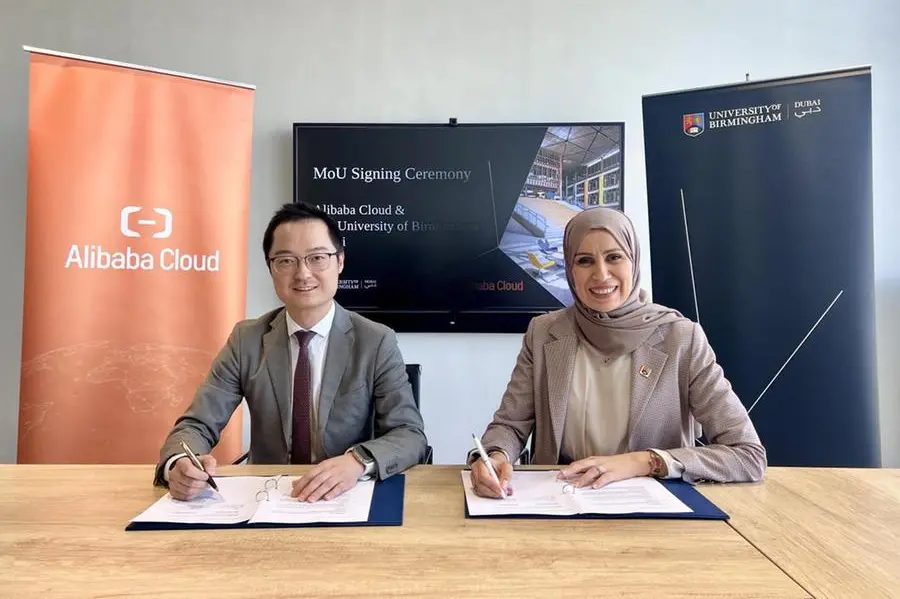
In May 2025, Alibaba Cloud partnered with financial services giant LuLu Financial Holdings on a multi-cloud strategy. In August, it teamed up with the University of Birmingham Dubai to advance cloud and AI education, cementing its role in the UAE's digital future.
In June 2025, the Central Bank of the UAE signed a memorandum of understanding with China's Cross-Border Interbank Payment System (CIPS) to streamline payment infrastructure, followed in November by the first cross-border central bank digital currency transaction through the new Jisr CBDC platform.
"As the nation invests in a knowledge-based, sustainable future, businesses in digital innovation, green technologies, advanced manufacturing, and high-value services — including healthcare and education — are well-positioned to thrive in the UAE's next phase of growth," Maria Kotova, regional director of the Middle East for Dezan Shira & Associates.
Energy Transition: Beyond the Buyer-Seller Model
The energy relationship between China and the UAE has evolved from a simple buyer-seller dynamic into a collaborative model for the global energy transition. Chinese contractors are playing a central role in the UAE's renewable energy ambitions.
Shanghai Electric Group's hybrid concentrated solar power and photovoltaic plant in the Dubai desert represents an earlier milestone. Chinese firms are also partnering on the world's largest Battery Energy Storage System (BESS), which is critical infrastructure for managing intermittent renewable generation.
Infrastructure: Building the Backbone of Mobility
Chinese contractors are supporting giga projects like Etihad Rail, the UAE's national rail network. The system will connect cities, industrial zones, and ports across all seven emirates, supporting both freight and passenger services. Freight operations are already underway; passenger service launches this year.
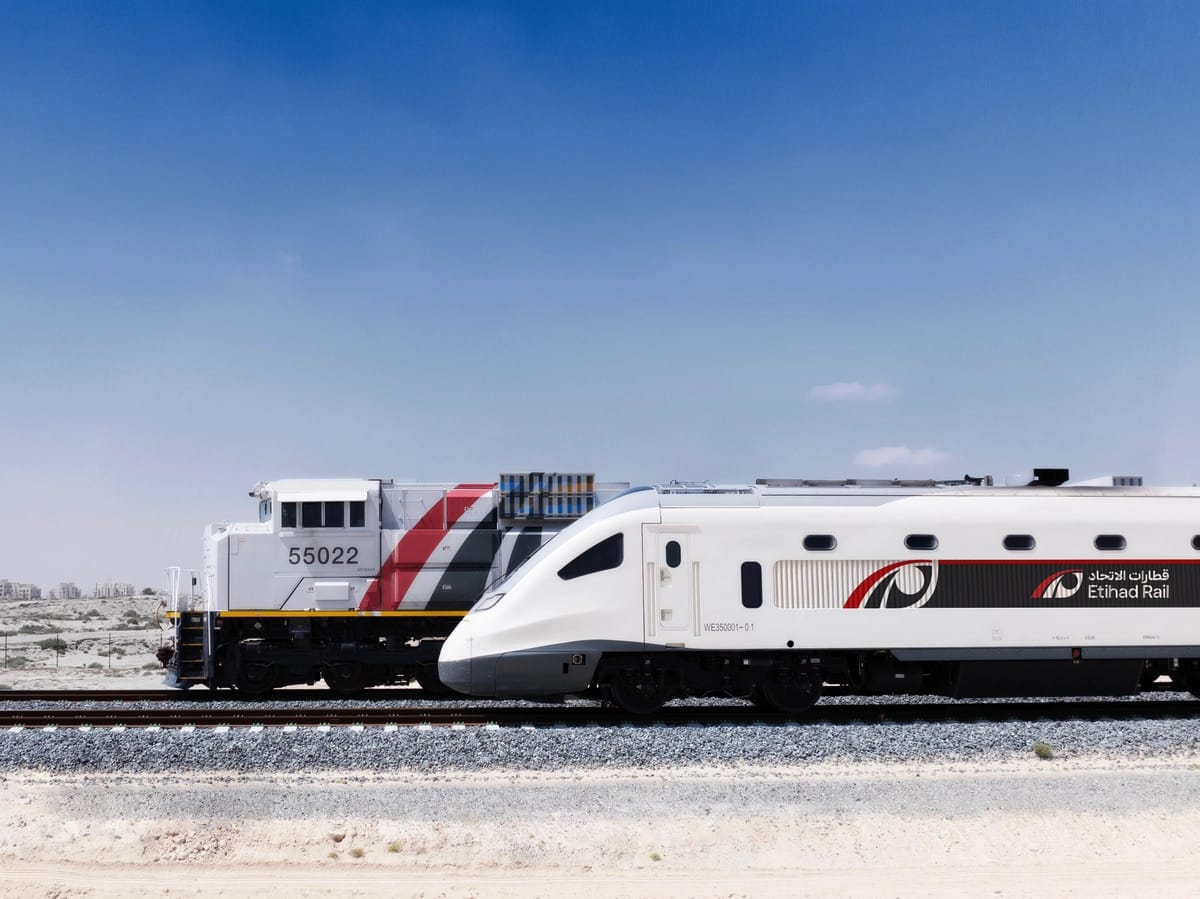
The rail will enable companies to transport goods more cost-effectively and sustainably while revolutionising travel — cutting journeys between Abu Dhabi and Dubai to just 30 minutes. Over the next 50 years, the high-speed train is expected to contribute AED 145 billion to the UAE's GDP.
Tourism: A Growing Cultural Exchange
Chinese companies aren't the only ones drawn to the UAE; Chinese tourists are flocking in, lured by favourable policies and cultural landmarks.
Air connectivity deepened in January 2026 when Air China launched a four-times-weekly direct service between Beijing Capital International Airport and Zayed International Airport, giving Abu Dhabi access to both of Beijing's primary international gateways.
"The UAE has consistently developed its Chinese inbound tourism market over the past decade with a winning combination of visa-free entry, strong outreach, and well-developed connectivity," Sienna Parulis-Cook, director of marketing and communications at Dragon Trail International, explained.
Dubai remains the main gateway for Chinese travellers, recording a 31% year-on-year surge to 824,000 Chinese visitors in 2024, according to the Department of Economy and Tourism.
What This Means for the Region
With the UAE's GDP projected to grow by 4.8%–4.9% in 2025 and 5.4% in 2026 — significantly outpacing global growth forecasts of 3.0%–3.1% — China's bet appears well placed. The real test will be whether Chinese investment helps the UAE realise its goal of doubling GDP from AED 1.49 trillion to AED 3 trillion by 2031.
The structural shift is already evident: non-oil trade has nearly doubled since 2021 to reach 3.8 trillion dirhams ($1.03 trillion), fulfilling 95% of targets once set for 2031 — five years ahead of schedule.
The UAE isn't merely on the receiving end of this relationship. "China benefits strategically, economically, and geopolitically from the UAE's growth — gaining a critical logistics hub for global trade, enhanced energy security, expanded market access to the Middle East and Africa, and stronger technological and diplomatic cooperation," Kotova said.
China's assistance supports its Belt and Road Initiative, which aims to improve global physical, financial, and policy conditions to facilitate trade. In November 2025, Etihad Credit Insurance signed a memorandum of understanding with China's Sinosure to jointly finance export and investment projects, facilitating mutual market access and risk management across priority sectors. This creates opportunities for both Chinese and global businesses across the Middle East, with those aligning with national priorities poised to gain a competitive edge.
These investments aren't just elevating one nation — they're shaping whole industries and redefining global power dynamics.
Written by