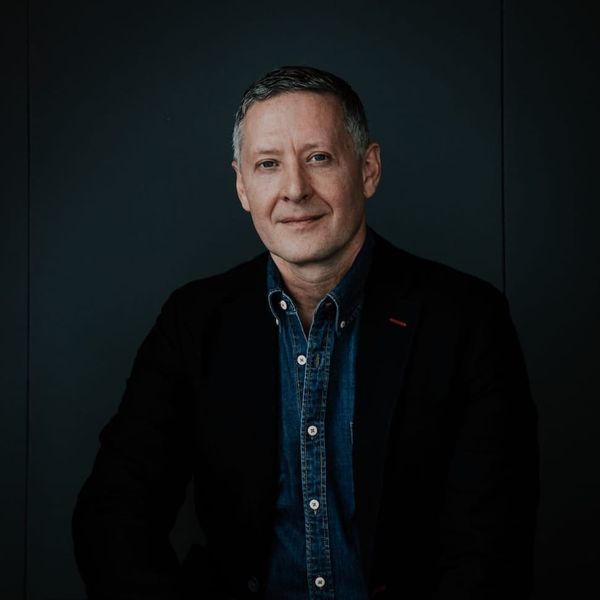
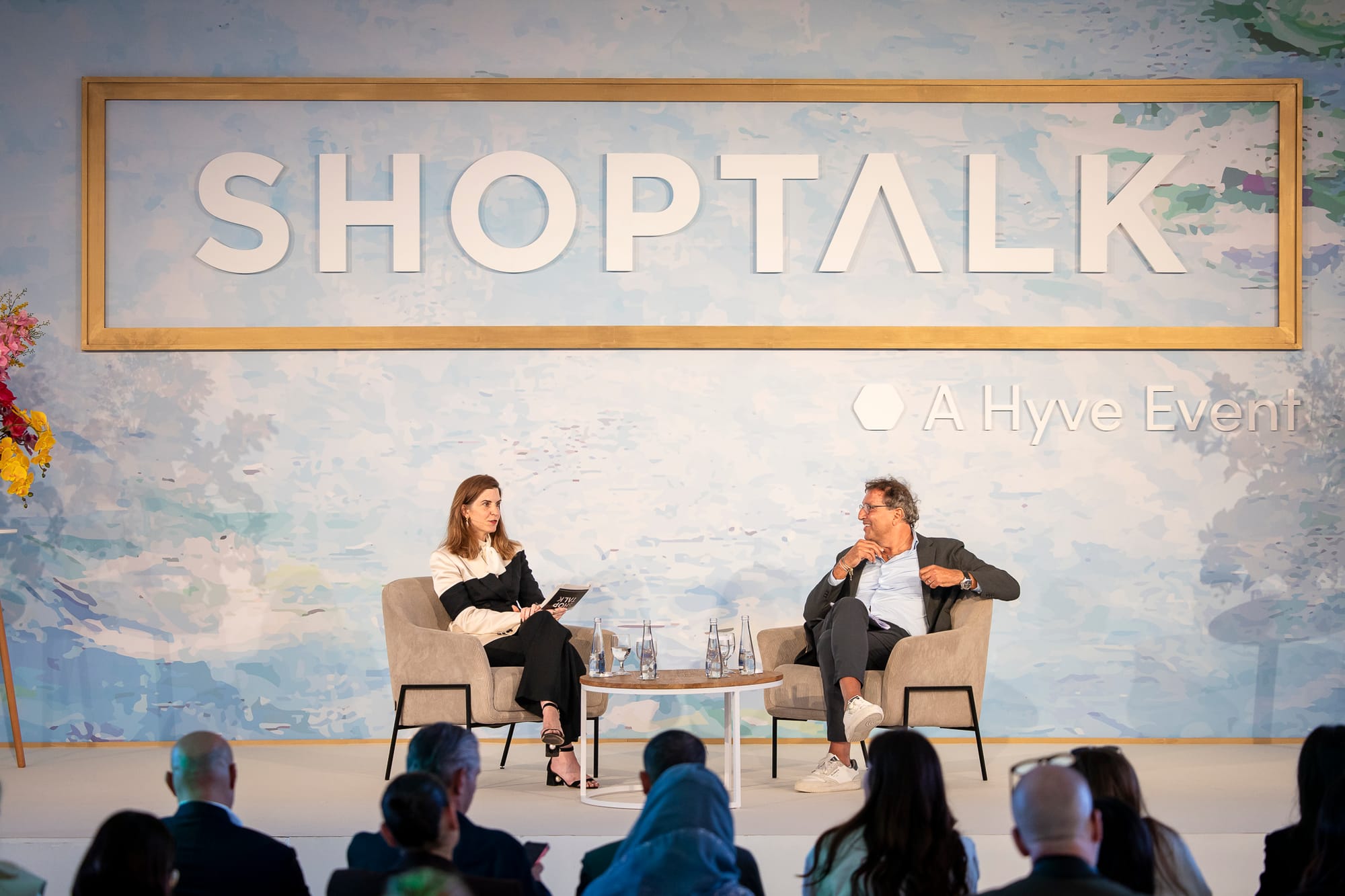
We sat down with Charles Awad to hear how more than 25 years of building brands across global and regional markets has shaped his thinking on what it truly takes to grow in the GCC. As former Chief Brand Officer at Majid Al Futtaim, he sat at the intersection of retail, lifestyle, and consumer experience across one of the Middle East's most expansive portfolios. Awad shares his views on the precision that separates winning brands from the rest, the evolving role of the mall as a destination platform, and why cultural fluency has become a non-negotiable growth driver.
What do international brands most often misunderstand about growth in the GCC?
One of the biggest misconceptions — about the GCC and even cities like Dubai — is that it's a single, homogenous consumer market.
In reality, it's a mosaic of distinct communities shaped by different cultural backgrounds, lifestyles, and expectations. Within the same city, Emirati nationals, Western expatriates, and large South Asian populations coexist, but expect very different forms of engagement from brands. Sustainable growth comes from a deep understanding of these nuances and tailoring value propositions accordingly. In this region, relevance is driven by precision, not scale.
This complexity extends beyond cities to the regional level. While the GCC shares common threads, each market has its own consumer dynamics and cultural context. Even when opening the same brand across our mall portfolio, strategy, execution, and target audience often differ by country. What works in Dubai may not resonate in Riyadh, and European playbooks rarely translate without adaptation.
A second, equally critical misunderstanding is the tendency to underestimate the complexity of operating at scale. Operating rhythms, peak trading calendars, staffing realities, last-mile expectations, and regulatory nuances all materially shape performance. The brands that succeed are those that respect this complexity from day one and invest early in the capabilities required to deliver consistently, precisely, and resiliently.
Can you share an example of a brand that scaled well because it didn't copy-paste its global model?
Lululemon is a strong case study because it illustrates a defining truth about the GCC: it's a high-opportunity market, but one that demands high precision. Brands that scale successfully here are deliberate about every dimension — store format, assortment curation, language, service model, and the way community is built and sustained.
In this environment, operational flexibility consistently outperforms rigid global playbooks. The strongest growth comes from marrying local nuance with uncompromising global standards — thoughtful adaptation rather than superficial localisation.
Where does the complexity show up most, and what builds trust at scale?
Trust is built in micro-moments: service quality, speed, issue resolution, and — above all — consistency, especially under pressure. Those moments are decisive. They're where brands either compound credibility or quietly erode it.
People matter disproportionately in this region. Store leadership is a true strategic asset. Strong store leaders don't simply run operations — they build relationships, uphold standards, and shape repeat behaviour through presence, judgment, and care.
Clienteling tools matter as well — including channels like WhatsApp — but only when they're brand-safe, disciplined, and well governed. Used properly, they deepen relationships and increase relevance. Used poorly, they introduce inconsistency and dilute the experience the brand is trying to protect.
I'll share a personal example because it captures regional expectations precisely. I was spending the day at the beach when I decided to buy an iPhone for my daughter's birthday. I ordered it from Carrefour, and it was delivered to me at the beach in under 30 minutes.
It's a light story, but a serious point: customers here are accustomed to extraordinary efficiency and service. That is the baseline. Brands operating in this market must design their operations to meet it — every day, without exception.
How have GCC consumer expectations evolved, and what does that mean for destinations like Mall of the Emirates?
The mall has evolved into a destination platform. It's no longer just about transactions — it's about experience, culture, dining, community, leisure, and discovery. People are spending time, not only money.
Mall of the Emirates reflects how malls' role is changing in real time. The ambition is to build a place customers actively choose to return to — one that consistently offers fresh reasons to visit, stay longer, and bring family and friends back.
Luxury and premium today require experience design, not just product. The strategic thesis behind major investments in Mall of the Emirates is therefore centred on lifetime value and frequency, not one-off transactions.
It's about designing for repeat visitation and deeper emotional connection — through comfort, hospitality, culture, and moments of surprise. This is why the destination continues to expand its cultural and community layer, with anchors such as the Covent Garden Theatre alongside a music-and-dance school. When customers are given compelling reasons to return — newness, service, culture, and genuinely enjoyable time spent — you build deeper loyalty and drive stronger, more sustainable long-term growth.
How are local brands reshaping competition, and what can international players learn from them?
Local brands are outperforming because they combine cultural fluency with community connection, speed, and relevance. Across the region, including markets such as Saudi Arabia and Oman, local concepts often feel immediately right because they're designed around how people actually live, gather, and engage.
For global brands entering the GCC, deep localisation is critical. Cultural nuance shapes everything from campaign tone and product mix to in-store engagement, and missteps — even subtle ones — can undermine relevance.
We see thoughtful localisation brought to life in tangible ways: curated Ramadan collections that introduce more modest selections whilst retaining brand identity; Abercrombie & Fitch adapting its iconic logo into Arabic for the first time, reinforcing cultural relevance without diluting brand equity; and brands actively celebrating National Days to deepen emotional connection and local resonance.
There's a clear lesson here: agility matters, and over-standardisation dilutes relevance. The brands that succeed adapt with intent — learning from local operators and, where appropriate, accelerating credibility through partnerships that are authentic, additive, and value-creating, rather than purely promotional.
What capabilities do brands need now, and how does loyalty change the growth equation?
The winners are building a disciplined, clearly defined capability stack: an omnichannel approach that truly works end-to-end, best-in-class clienteling, rigorous service operations, agile supply chains, and advanced analytics that convert insights into action.
Loyalty, too, is being redefined. It's no longer about points alone, but about access, recognition, and experience — powered by a data engine that enables relevance at scale.
When executed well, loyalty becomes a growth platform in its own right: increasing frequency, extending lifetime value, and deepening emotional connection, because customers feel understood, not targeted.
What's the one guiding principle global brand leaders should anchor on to win in the GCC?
Relevance in the GCC isn't declared; it's earned. And earned daily through precision, cultural fluency, and disciplined execution. It demands a deep understanding of the customer, genuine respect for local context, and an uncompromising standard of delivery, because expectations here are high, and consistency is non-negotiable.
But excellence alone isn't enough. The brands that endure push beyond 'good enough' to create moments of surprise and delight — experiences that resonate emotionally, invite repeat engagement, and give people a reason to return, again and again.
ABOUT CHARLES AWAD
Charles Awad was the Chief Brand Officer at Majid Al Futtaim Holding until April 2026, where he shapes the Group's overarching brand agenda and drives customer lifetime value across its portfolio of operating companies. His remit spanned brand strategy, communications, innovation, loyalty, customer engagement, and experience design, as well as oversight of marketing investment strategies and group-wide media and partnership initiatives.
Awad brings more than 25 years of experience in building B2C and B2B brands across global markets. Before joining Majid Al Futtaim, he served as Growth Strategy Adviser for Allergan in Zurich, where he developed strategies to triple the medical aesthetics business by 2025, and before that as Chief Marketing and Innovation Officer for Oettinger Davidoff AG, where he doubled global Davidoff net sales and profit over five years. He also spent 17 years at Procter & Gamble in senior roles across the Middle East and Europe, and holds an MBA from INSEAD, as well as Bachelor's and Master's degrees in Industrial Engineering from Purdue University.
Written by