KEY TAKEAWAYS
- Frieze's arrival risks displacing the polycentric globalism that distinguishes Art Abu Dhabi from standard art-market circuits.
- Manar Abu Dhabi's site-specific model turns heritage landscapes into diplomatic tools, not decorative backdrops.
- Appointing curators with dual institutional and archaeological fluency gives Abu Dhabi's public-art programme structural reach that capital alone cannot replicate.
International art fairs have long functioned as catalysts for urban reinvention. Art Basel Miami Beach reconfigured Miami's cultural geography; Frieze Seoul amplified South Korea's soft power on the global stage. The recent announcements of Art Basel's Doha edition and Frieze's debut Middle East fair in Abu Dhabi signal that a region already under intense global scrutiny is preparing to accelerate a fundamental shift in the cultural order.
Abu Dhabi appears well placed. Its art ecosystem rests on a dual model: openness to world-class international input alongside a sustained effort to unearth, preserve, and extend local and regional traditions. The result is a plural artistic identity and, beneath it, a durable cultural infrastructure.
Institution Building: Why the System Matters
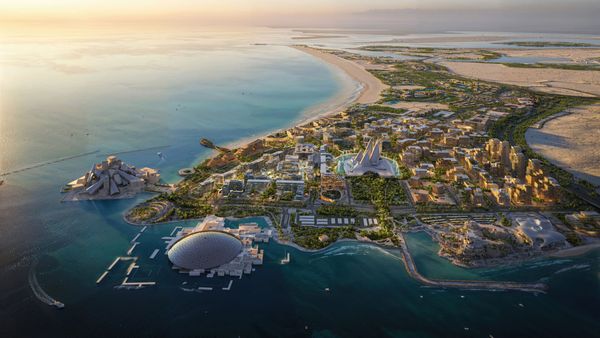
It would be reductive to attribute the UAE's cultural expansion solely to oil wealth. Those resources have certainly enabled Abu Dhabi to establish major institutions at speed — from the Louvre Abu Dhabi to the recently opened Natural History Museum and Zayed National Museum. The Guggenheim Abu Dhabi is expected to join them next year, turning Saadiyat Cultural District into one of the most concentrated clusters of cultural institutions anywhere in the world.
Yet the city's real advantage is less its architectural grandeur than the sophistication of its strategic approach. Rather than following China's dominant model — importing blockbuster exhibitions, adapting them locally, and measuring success through ticket revenue — Abu Dhabi has prioritised the recruitment of international leadership and institutional expertise.
The result is a mature cultural framework that connects easily with global counterparts, reducing scope for cross-cultural misinterpretation and ensuring that the emirate's cultural output is framed for an international audience. The key distinction lies in treating culture as knowledge, identity, and diplomacy rather than mass-market entertainment.
Art Abu Dhabi: a Polycentric Platform Under Pressure
In contrast to Saudi Arabia's reliance on grand cultural spectacles, Abu Dhabi emphasises long-term institutional development and outward-facing exchange.
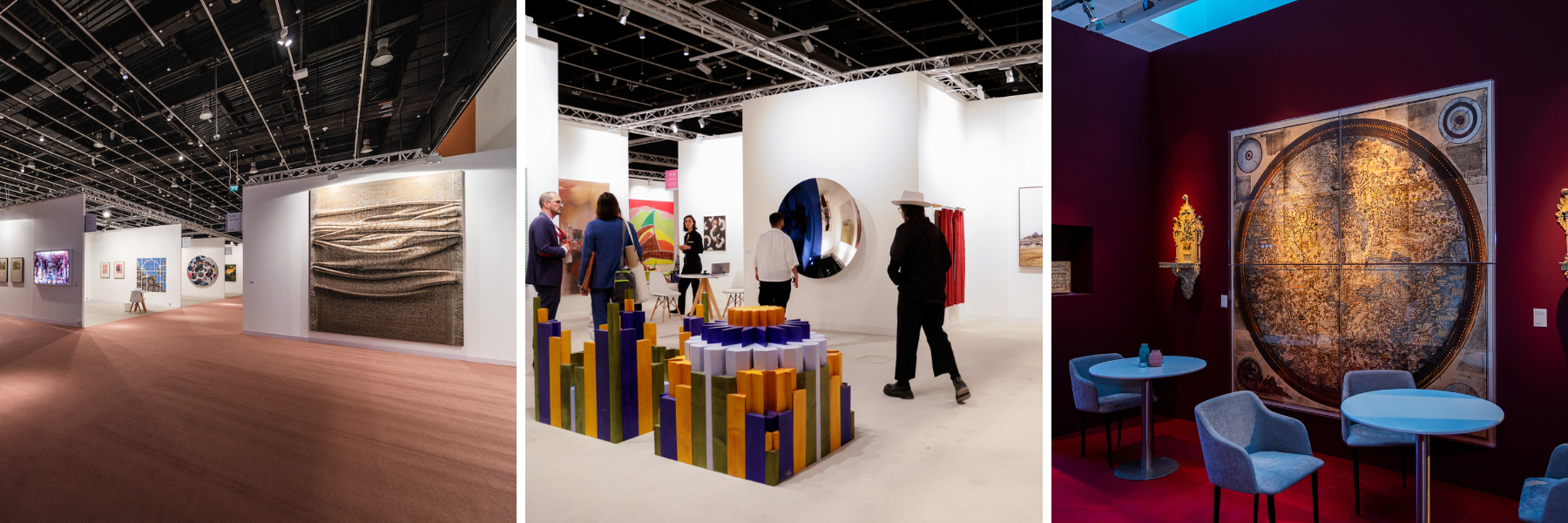
That ethos is visible at Art Abu Dhabi, a commercial fair that nonetheless embeds collaboration with institutions at its core. Stands were hosted by cultural institutions rather than consumer brands. The Italian Ministry of Culture and the Italian Consulate partnered with Mazzoleni to present a booth surveying twentieth- and twenty-first-century Italian art, including works by Giorgio de Chirico, Lucio Fontana, and Michelangelo Pistoletto. Nigeria's Osahon Okunbo Foundation, supported by national cultural agencies, offered a wide-ranging display of contemporary Nigerian art.
Yet among art professionals, a concern surfaced repeatedly. Would the transition from Art Abu Dhabi to Frieze erode this unfiltered global breadth? Would Frieze's selection processes marginalise smaller galleries that represent the creative energy of the Global South? Would Abu Dhabi be absorbed into a standard art-market circuit, receiving unsold inventory from the United States and Europe repurposed for a new geography?
Some of the most vibrant local art scenes are precisely those not yet fully integrated into Euro-American structures. This year's Art Abu Dhabi included galleries from Africa, Central Asia, the Middle East, Japan, and Korea — many of which remain little known internationally. The question now is whether this distinctive globalism is enjoying its final flourishing before more established market logics arrive.
Where Heritage and Contemporary Art Converge
A second pillar of Abu Dhabi's cultural strategy is its capacity to place history at the centre of its narrative, amplified through contemporary art and international partnership.
Nomad Circle, the collectible design fair held in the decommissioned Zayed International Airport, illustrated the approach. Nomad transformed the Abu Dhabi edition into a simulated airport journey — check-in counters, boarding passes, exhibition information presented as departure gates — while simultaneously reactivating the terminal itself, a modernist Gulf landmark designed in the 1970s and 1980s by Paul Andreu, architect of Paris Charles de Gaulle Airport. The aim, as founder Nicolas Bellavance-Lecompte explained, was for visitors to experience the terminal as an architectural narrative rather than a passive backdrop.
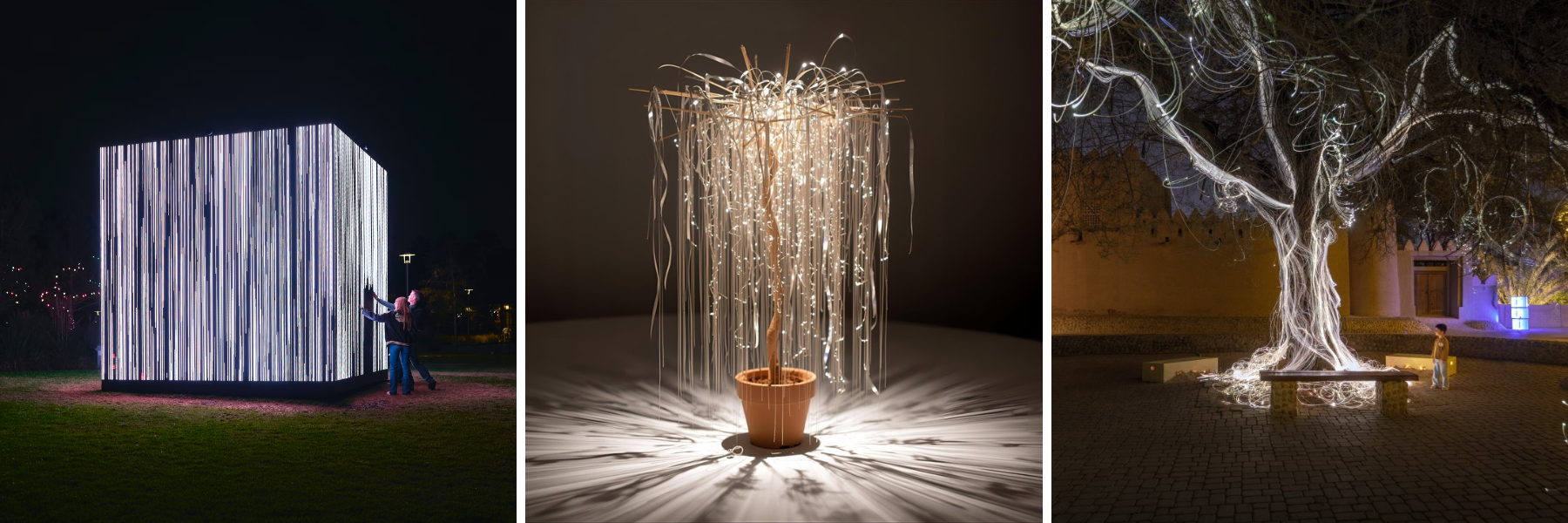
This logic runs through Manar Abu Dhabi, now in its second edition. The public-art initiative, led by artistic director Khai Hori — previously a senior curator at Singapore Art Museum and Deputy Director of Artistic Programming at Palais de Tokyo — positions the UAE within global contemporary discourse whilst using site-specific installations to animate the country's cultural memory. Fifteen artists produced twenty-two interactive and technologically driven works, spanning artificial intelligence and large-scale light installations, across UNESCO-listed oases in Al Ain, the wetland landscapes of Jubail Island, and the port area at Souq Al Mina.
The contrast with China is instructive. Exhibitions staged in Shanghai's historic villas or Beijing's courtyards largely serve market interests; architecture becomes backdrop rather than protagonist, with grand residences reduced to decorative sets or social media environments. Across the Middle East, a different strategy is taking hold: international contemporary art revives traditional culture by placing works within heritage sites, so that ancient civilisations and present-day narratives speak in the same visual and conceptual language.
Public Art as Civic Infrastructure
Unlike many public-art programmes that function as supplements to art weeks, Manar Abu Dhabi is a city-wide experiment designed for residents and visitors alike. On a Sunday evening at Jubail Island, queues formed long before opening; families engaged enthusiastically with installations, and food stalls contributed to an atmosphere closer to a festival than an exhibition.
For Khai Hori, Abu Dhabi's advantage lies in leadership that treats culture as an integral element of urban planning. Government representatives engaged installations with curiosity rather than bureaucratic detachment during official walkthroughs. Curators worked closely with archaeologists to protect heritage boundaries and advised international artists on cultural resonance. Rafael Lozano-Hemmer's Translation Streams, for example, used interactive projections of Arabic poetry that shifted between Arabic and English as visitors moved. Curators helped identify poems that would hold particular meaning for Emirati audiences.
Audience surveys, led by Clemence Bergal within Public Art Abu Dhabi, help determine which temporary works may be acquired permanently. Independent organisations such as 421 Arts Campus provide the city's everyday cultural foundation, offering year-round exhibitions, learning programmes, and community-oriented collaborations. Abu Dhabi's cultural influence rests not only on landmark institutions but on these quieter, future-oriented infrastructures.
A Half-Century of Groundwork
The UAE is often misrepresented as having turned to culture only when it grew anxious about oil dependency. As Reem Fadda, Director of Cultural Programmes at the Department of Culture and Tourism Abu Dhabi, notes, the emirate's cultural history spans decades. The Abu Dhabi Cultural Foundation was established in the 1970s and Al Ain Museum, recently renovated, was founded in 1969 — the oldest museum in the country.
Across the Middle East, governments are investing heavily in cultural development, but Fadda thinks that the region's momentum is driven not by rivalry but by a spirit of openness and collaboration — what she describes as a collective renaissance. Abu Dhabi is positioning itself as a cultural neutral zone: a platform enabling Global South artists to reach worldwide audiences, and a node connecting Asian, Middle Eastern, and African civilisations.
The UAE's global identity is built not through unilateral declarations, but through a precise understanding of its global counterparts — which intellectual property to import, whom to appoint to leadership roles, which artistic networks to cultivate. Capital can build institutions. Culture builds vision. Culture determines how far that capital can travel, and how a place is ultimately perceived by the world.
The Chinese version of this article was published on FT Chinese (ftchinese.com).
Written by