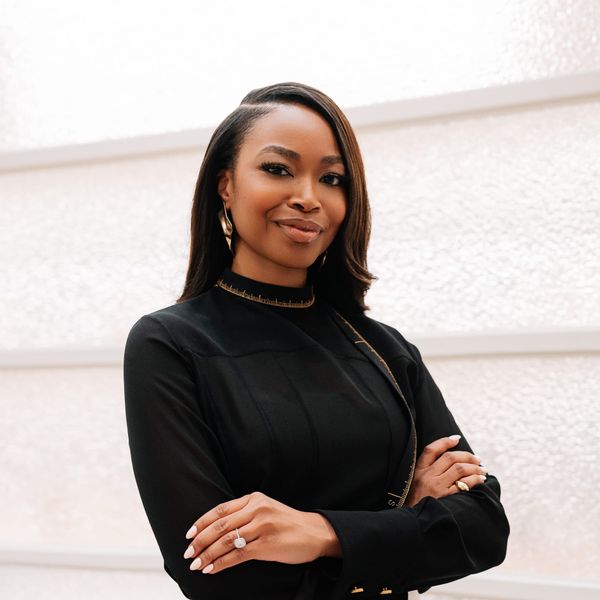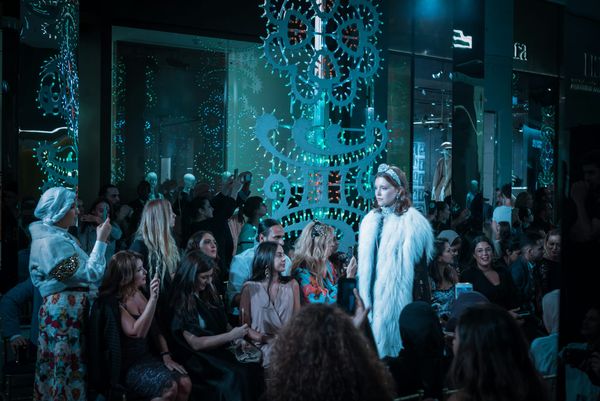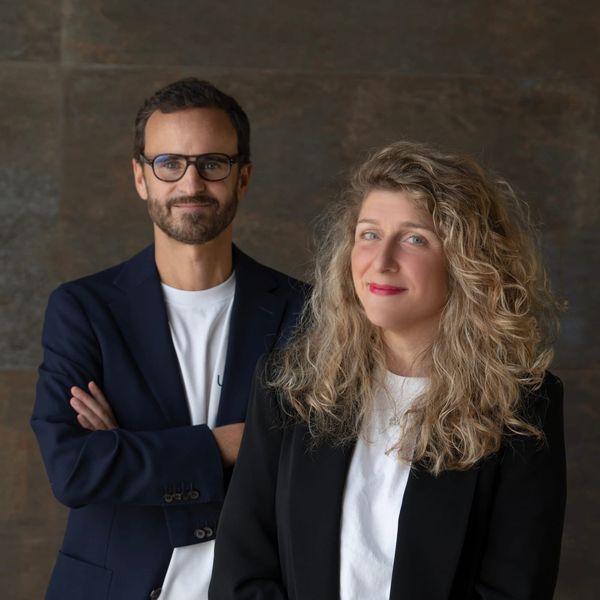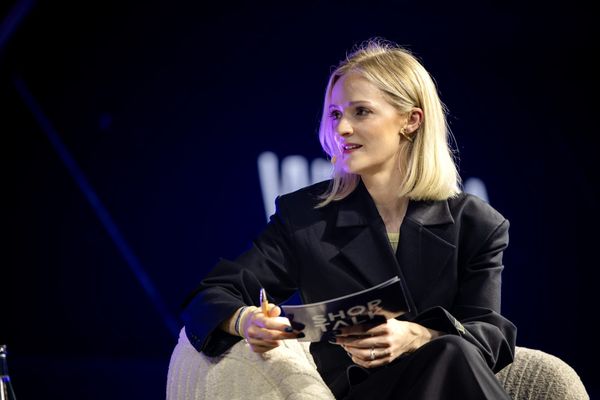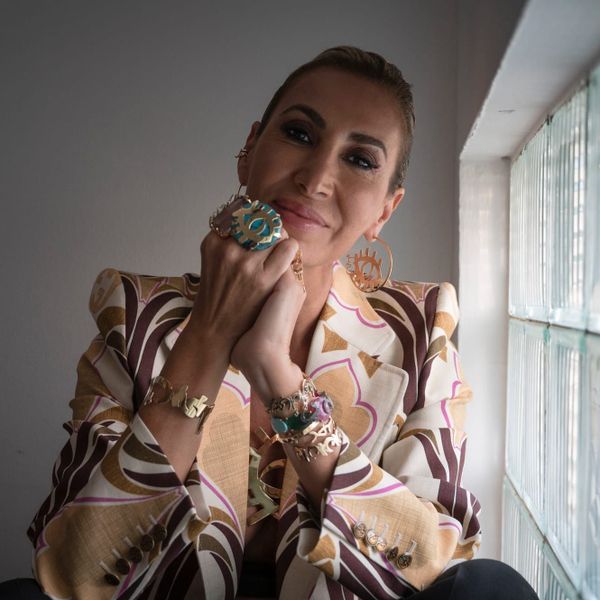
We sat down with Nadine Kanso to hear how questions of identity and self-expression, first explored in photography, led her to transform the Arabic letter into jewellery through Bil Arabi, the brand she founded in Dubai.
Today, as the brand marks twenty years, she is turning to its archives. Kanso shares her perspective on translating calligraphy into form, the commercial choices that protect a creative brand, and how a single word can become part of someone's story.
What prompted you to create Bil Arabi?
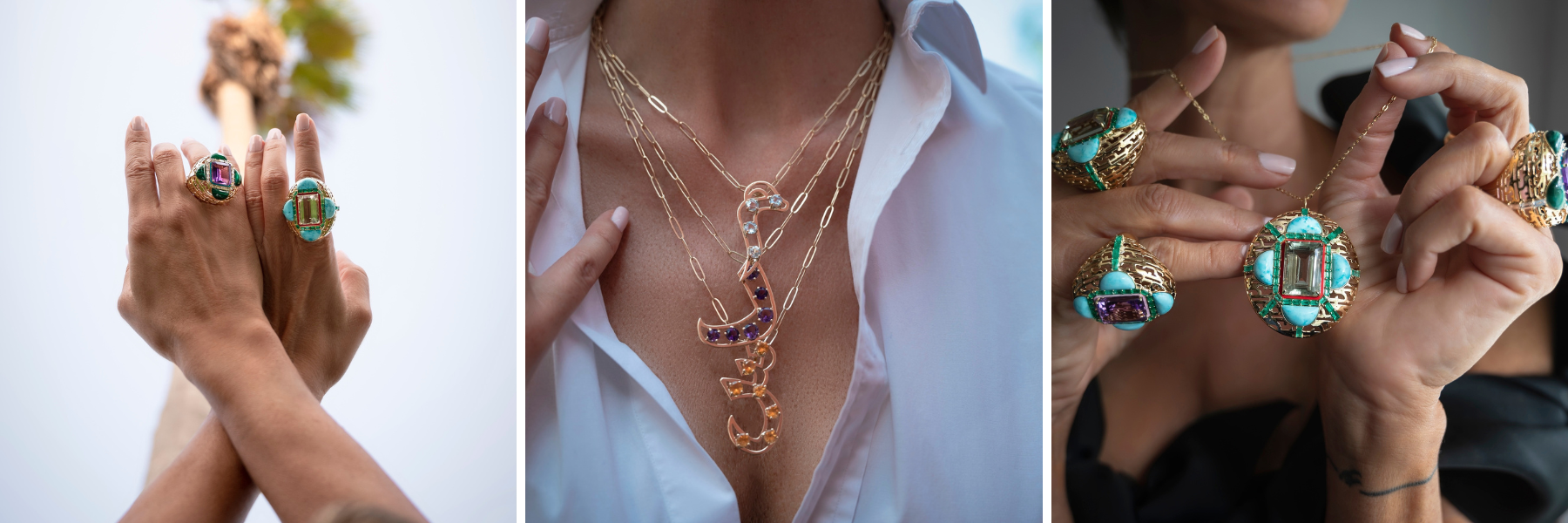
Bil Arabi started from a personal place. I was working in photography and exploring questions around identity and self-expression. I wanted to create something that allowed people to wear their identity, their language, and their stories. Arabic has always been deeply connected to who I am, so transforming the Arabic letter into jewellery felt natural. I wanted to show that Arabic can be contemporary, beautiful, and deeply personal.
How does a letter or word become a finished piece?
It always starts with the meaning. I look at a word or letter and think about what it represents and how it can translate into a form that feels natural to wear. The challenge is to preserve the beauty and character of the Arabic letter while creating a piece of jewellery with its own presence. From there, we explore the proportions, shape, materials, and craftsmanship until the calligraphy becomes a piece of jewellery rather than simply a word written in gold.
How has building the brand in Dubai shaped your work?
Dubai has been an important part of Bil Arabi's journey. It's a city where different cultures, languages, and ideas meet, which has allowed Bil Arabi to grow while remaining rooted in its Arabic identity. Being based in the UAE has also given us the opportunity to create and manufacture locally, and to be part of a growing creative landscape.
What has proved more challenging?
One challenge of building an independent jewellery brand is growing while staying true to your identity. There's always pressure to follow trends, but I've always believed Bil Arabi should have its own language.
Which decision has most shaped Bil Arabi's growth?
Staying true to the idea that Arabic isn't just an aesthetic, but the brand's foundation. Over the years, there have been many opportunities to take Bil Arabi in different directions, but protecting the meaning behind the work has always been important to me.
Another important decision was to continue investing in craftsmanship and quality. Bil Arabi has evolved from its beginnings, but the connection between meaning, design, and craftsmanship has remained at the centre.
As the business has grown, have you had to choose between a commercial opportunity and your creative instincts?
Many times. Every creative business reaches moments where you have to decide what's right for the brand rather than what's simply the easiest commercial opportunity.
For me, the question is always whether an opportunity adds something meaningful to Bil Arabi. If it doesn't feel aligned with who we are, I'd rather say no and protect the brand. Growth matters, but growing in the right direction matters more.
How does your work in photography feed into your jewellery?
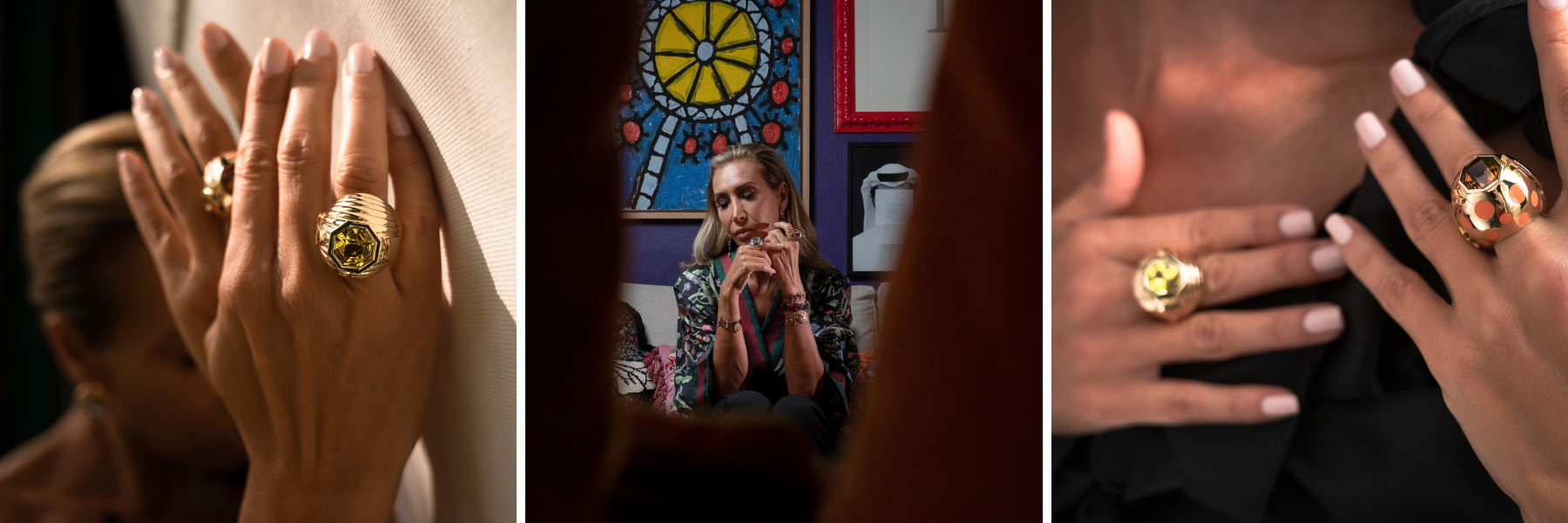
Photography taught me to look at things differently. It made me aware of composition, proportion, light, movement, and the stories behind people and objects, and that way of seeing naturally comes into my jewellery.
I approach jewellery almost like an image. I think about how a piece sits on the body, how it moves, how the light interacts with it, and what someone sees when they look at it. Photography also taught me the importance of capturing a moment, and jewellery has that same ability to hold a personal memory or meaning.
Is there a story from someone who wears your pieces that has stayed with you?
There have been many. What stays with me most is when someone chooses a word because it has personal meaning in their life, then tells me the story behind it.
A piece can start as a simple Arabic word, but once someone wears it because it represents their mother, their child, their partner, their identity, or something they believe in, it becomes something much more personal. That's what makes the work meaningful to me. The jewellery becomes part of someone's story.
What would you like to explore next, through Bil Arabi or in your wider creative work?
I'm interested in continuing to explore the relationship between language, identity, culture, and contemporary design. Typography has always been an important part of my creative practice, whether working in Arabic, Latin, or English. My use of typography and calligraphy is fundamental to how I approach design, and I see both as a visual language that can communicate meaning, emotion, and identity.
As Bil Arabi enters its twentieth year, I'm also looking at our archives and thinking about how our history can inform what comes next. I want the brand to continue evolving while remaining rooted in its original purpose. There's still so much to explore in language, calligraphy, and typography, and I feel we're only beginning to understand the many ways they can translate into contemporary jewellery and creative work.
ABOUT NADINE KANSO
Nadine Kanso is the founder of Bil Arabi, the Dubai-based jewellery brand she launched in 2006, whose rings, earrings, bracelets, pendants, and cufflinks draw on the shapes and forms of the Arabic alphabet. In 2023, she became the first Arab designer approached by Guerlain, the LVMH-owned French perfume and beauty house, for a design collaboration, creating limited-edition perfume bottles encrusted with 24-karat gold crystals. In 2024, she partnered with Berluti to mark the house's expansion in the region, merging its logo with the Arabic character 'Kunn', meaning 'to be', for a capsule collection of leather goods and apparel.
Kanso grew up in the Arab world, where the calligraphy around her fostered a deep interest in typography that laid the foundation for her designs. She has also worked in photography, and her typographic practice spans Arabic, Latin, and English. She lives and works in Dubai.
Written by