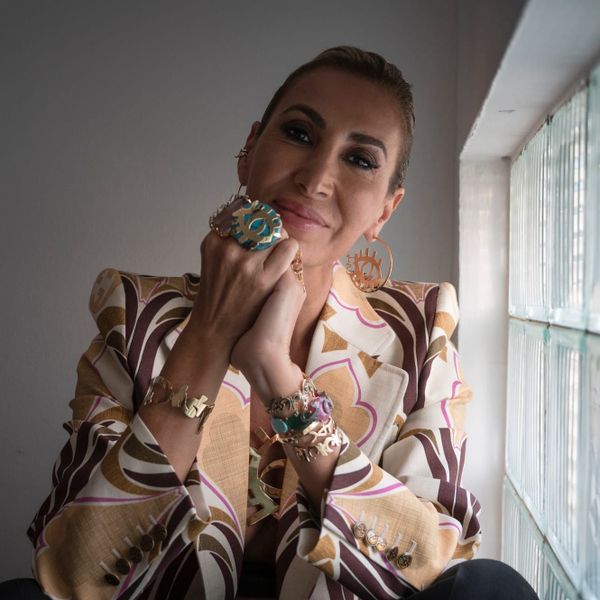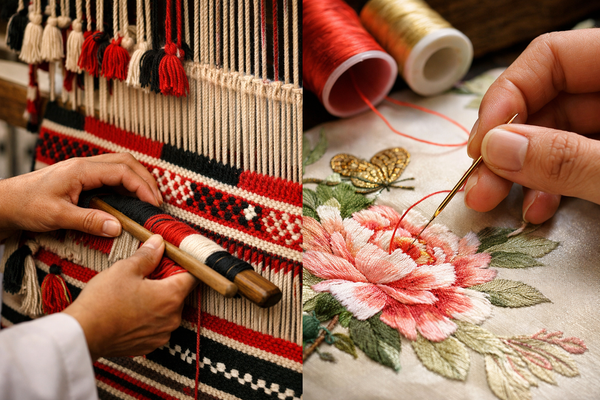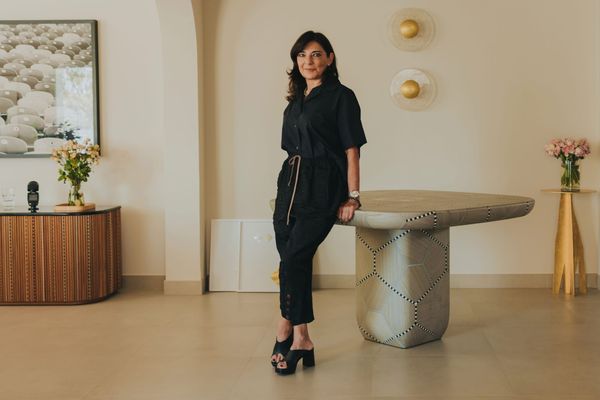
Nada Debs can spend a long time moving a line a few millimetres. That sensitivity to proportion and detail, formed growing up in Japan and later turned towards the craft traditions she encountered in Beirut and Damascus, has become the foundation of a studio that gives the region’s handwork a contemporary form.
Her latest chapter brings that work to Dubai, where she has opened her first international flagship at Alserkal Avenue. It follows a run of collaborations with heritage houses — perfume cases for Dior, a reimagined tantalus for Baccarat, and a bakhoor ritual set for Louis Vuitton.
In conversation with The Meridio, Debs discusses the encounters that shaped her practice, what hospitality and gifting in the UAE have taught her about objects, and why the studio’s growth must also sustain the artisans it works with.
How did growing up in Japan and building your studio in Beirut shape your approach to design and craft?
Growing up in Japan shaped my eye before I was aware of it. There’s a sensitivity to proportion, material, and detail, and a deep respect for the person who makes something. I learned that a simple object can carry a great deal of feeling.
When I moved to Beirut, I encountered a different visual language — expressive, decorative, and rich in craft traditions. Visiting workshops in Damascus was an important discovery for me. Seeing the intricacy of the work, I began to ask how these techniques could become part of contemporary life.
My approach developed through bringing these sensibilities together. I wanted to give our region's craftsmanship a contemporary expression whilst preserving the f handmade feel. Over time, that became the foundation of the studio: creating objects that connect cultures and carry something of the people who make them.
What drew you to Dubai for this next chapter, and why Alserkal Avenue for your boutique?
Dubai brings together people from so many places, which feels natural to me because my own life and work have developed between cultures. It offers an opportunity to introduce our work to a wider international audience whilst remaining connected to the region.
I wanted the boutique to communicate the world of Nada Debs: how the furniture, objects, materials, and colours relate to one another, and how craft can be part of everyday living. Having a space where people can spend time with the pieces makes that story much more tangible.
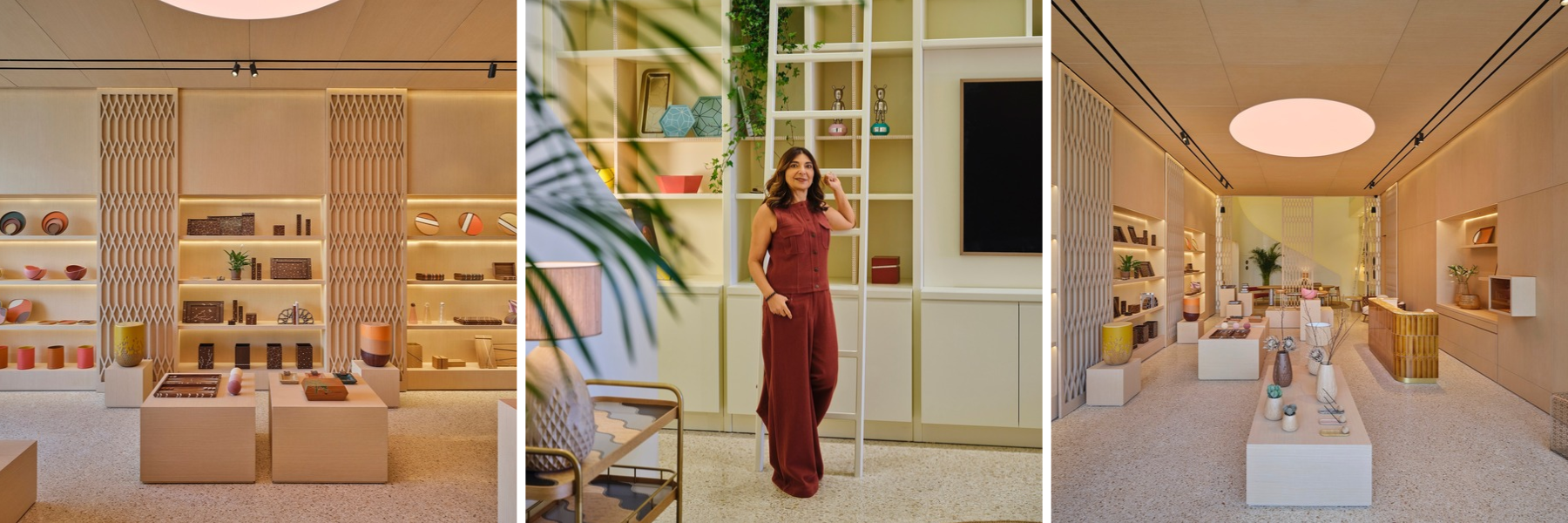
Alserkal Avenue felt right because of its relationship with art, design, and creative exchange. There’s a curiosity there that suits our work. A visitor might discover us whilst visiting a gallery and become interested in a material or technique they’ve never encountered before. I like that possibility of discovery and conversation.
How has time in the UAE influenced you creatively, and which encounters or traditions have found their way into your work?
What interests me in the UAE is the relationship between an international outlook and a strong attachment to local culture. It raises a question that’s central to my own practice: how do we move forward whilst keeping a sense of who we are?
Hospitality is one expression of that. The care that goes into welcoming someone, offering coffee, and making space for conversation resonates with my Lebanese background. It makes me think about design through the gestures around an object — how people sit together, serve one another, and feel comfortable in a space.
The UAE's culture of gifting also resonates with me. There’s such thought given to choosing an object that expresses generosity, appreciation, or respect. It connects closely to my interest in how objects carry meaning between people.
It also brings me back to an early visit to Topkapi Palace in Istanbul, where I saw extraordinary handcrafted gifts exchanged between rulers from different cultures. What stayed with me was how, centuries later, these objects could still communicate the care and skill that went into making them.
My time in the UAE has encouraged me to think more deeply about the pieces we create as gifts. I want them to carry something of our region, to feel personal, and to be worth keeping. For me, the beauty of a gift lies in the connection between the maker, the giver, and the person who receives it.
Which creative collaboration pushed you in an unexpected direction, and what made the partnership work?
Our collaboration with Louis Vuitton began with a bakhoor container and unexpectedly expanded into a limited-edition Capucines bag. Moving into a handbag was an exciting challenge: how could I introduce my own design language whilst respecting an object with such an established identity?
I drew inspiration from the Arabian desert — its dunes, colours, and rock formations — translating that landscape through leather marquetry and bringing geometry into the handle. Working with leather in this way opened up another expression of my interest in pattern, material, and craft.
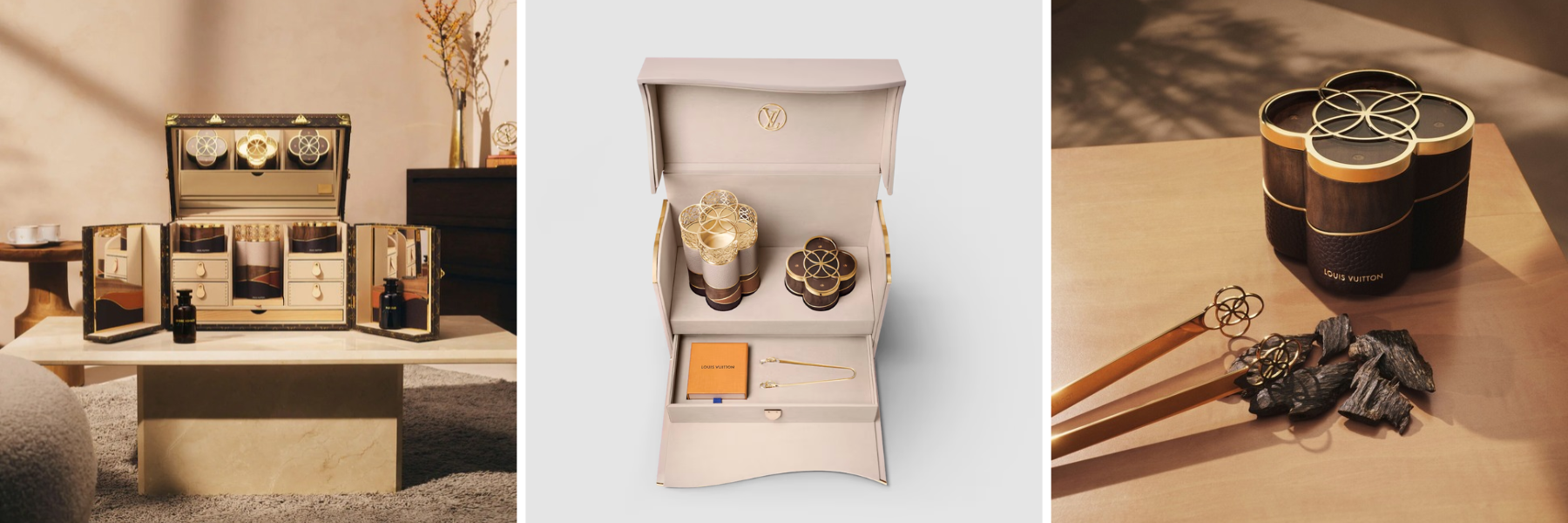
The partnership felt meaningful because of the trust placed in me as an Arab designer, alongside our shared appreciation for craftsmanship. With the bakhoor container, we were also bringing a ritual centred on scent, memory, and hospitality into Louis Vuitton’s world. It felt like an opportunity for our culture to contribute to the language of global luxury.
As you expand in the UAE and beyond, what’s the greatest challenge in protecting the craftsmanship and personal character of your work?
The biggest challenge is allowing the business to grow at a pace that respects how the work is made. Craft depends on knowledge, patience, and relationships built over years. You can’t simply increase production without considering the people and processes behind it.
My perfectionism certainly plays a role. I can spend a long time moving a line a few millimetres because those small decisions affect the whole piece. As the studio grows, the challenge is to communicate that sensitivity so it becomes a shared understanding within the team.
For me, protecting craftsmanship also means creating opportunities for it to continue. Artisans need consistent work, recognition, and reasons to pass on their knowledge. A successful brand can help sustain that. Our growth should strengthen the craft communities we work with and give their skills a meaningful place in contemporary design.
What are you most excited to explore next, and is there a project or ambition you can share?
I’m excited by how much there is still to discover within familiar techniques. Sometimes a small change in scale, material, or pattern opens an entirely new direction. Working with artisans and younger designers keeps that process alive; we each see possibilities that the others might miss.
I’m also interested in how furniture and objects come together to create an experience, including the role of sound and the ways people gather.
My larger ambition is to build a global luxury furniture and design brand with an Arab identity and craft at its heart.
I feel the studio has helped change perceptions of what furniture and home accessories from our region can be. I want to develop that contribution further, with a design language that’s recognisably ours and continues to evolve.
ABOUT NADA DEBS
Nada Debs is Creative Director of her eponymous international practice, creating spaces and objects across scales and mediums. Her work is guided by a philosophy she calls Handmade & Heartmade, which balances precision with intuition and process with emotion. She works with cultural and design institutions to advance craft-led design from the Global South, including the Institut du Monde Arabe, Design Doha, Downtown Design, the Uzbekistan Art and Culture Development Foundation, INAASH Association, Irthi, Maison de l’Artisan, and FBMI. Her collaborations with international brands include Christian Dior, Louis Vuitton, and Baccarat.
Of Levantine origin, Debs was raised in Japan and is now based between Beirut, Dubai, and Kobe. She trained as an interior architect at the Rhode Island School of Design. Years of living and travelling across continents led her to embrace craft as a means of reconnecting with her Arab roots whilst fostering dialogue between cultures.
Written by