This interview was originally published by Luxury Leaders Edit on October 8, 2026. Syndicated on The Meridio with permission.
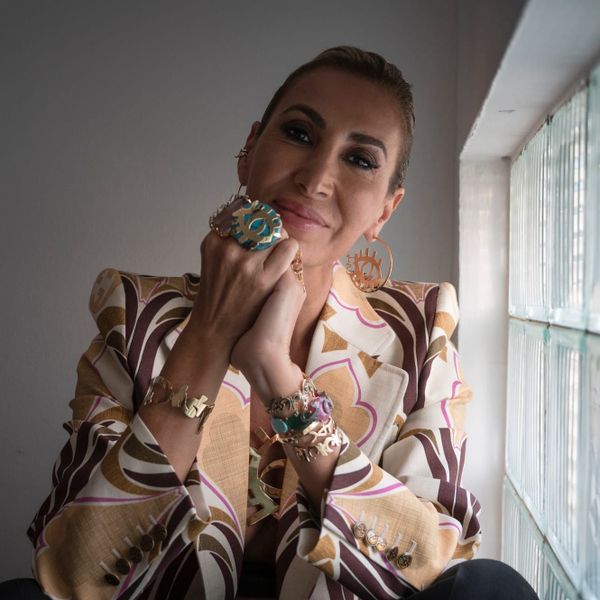
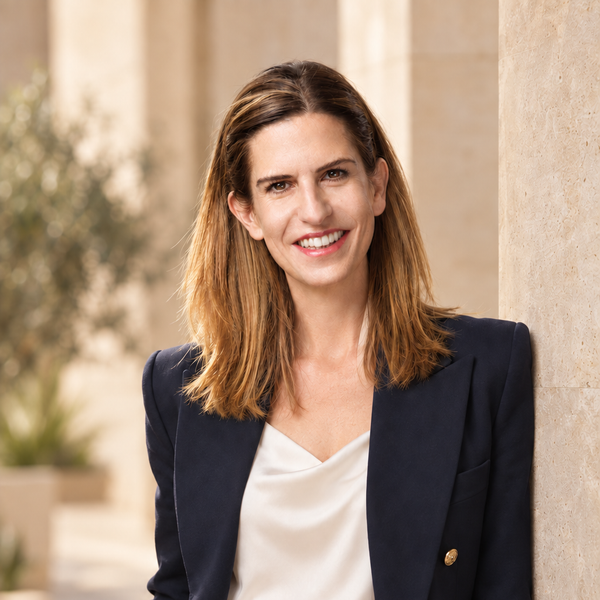
Chloé Reuter spent two decades in Shanghai, where she grew Reuter Communications from a one-woman business into an integrated luxury agency with more than 130 colleagues across Shanghai and Hong Kong, working with clients including Harrods, Swarovski, and Sotheby’s. The agency was acquired by Gusto Collective in 2020, and she fully exited in 2024. Today, through Reuter Ventures, she advises and invests in founder-led consumer and luxury businesses from her base in Abu Dhabi.
Here, Ben Lilly of Luxury Leaders Edit talks to Reuter, who also co-founded The Meridio, about what China taught her that applies to the Gulf, why luxury in the UAE is shifting from spectacle to curation, and what genuine cross-cultural storytelling requires.
Chloé, please tell us about your story and international journey.
I’m Chloé Reuter, a British-Luxembourgish entrepreneur, investor and advisor specialising in luxury, brand strategy and international growth. I am now based in Abu Dhabi, following more than two decades in Shanghai.
I was born in Brussels and moved to Hong Kong while at school. My love affair with China began almost immediately. I later studied Chinese and Japanese at Durham University and Renmin University of China in Beijing before beginning my career in Tokyo as a television producer for Reuters TV and Bloomberg TV. Journalism taught me how to identify the heart of a story, communicate clearly and multitask! It also taught me to be an early riser – I started work at 4 AM for 3 years! Those skills have shaped my entire career.
In 2005, I moved to Shanghai and joined the global creative agency DDB, where I spent five years working in communications and branding. At 31, with two young children and a stable career, I left to start my own company from scratch. The idea was simple: to help the world’s leading luxury brands understand China and build meaningful, sustainable businesses there.
I was probably naïve, which was useful. If I had understood how difficult building a company would be, I might never have started. Over the following decade, I grew Reuter Communications from a one-woman business into one of Asia’s leading integrated luxury agencies, with more than 130 colleagues and offices across Shanghai and Hong Kong. We built a highly profitable company and worked with exceptional brands, including Harrods, Estée Lauder Companies, Canada Goose, Swarovski, Sotheby’s, Porsche, Ritz-Carlton, and other leading names across fashion, beauty, hospitality, retail, and travel.
Building a business in Shanghai during such a period of extraordinary change was an enormous privilege. China taught me how quickly consumer behaviour can evolve and how important it is for brands to remain curious, agile and locally relevant. We constantly adapted, developed new capabilities and launched new services while scaling the company at the same time.
I am proud of the commercial success we achieved, but I am equally proud that we built the company around kindness. I wanted to prove that kindness and high performance are not contradictory. No one builds a successful business alone, and one of the most important lessons I learned was to surround myself with people who were smarter than me (shout out to my business partner Nick Cakebread, who joined me on the journey!), give them room to grow and create a culture in which they could do their best work.
Reuter Communications was acquired by Gusto Collective in 2020, and I fully exited the business in 2024. Today, through Reuter Ventures, I advise and invest in founder-led consumer and luxury businesses, helping them refine their positioning, enter new markets, build strategic relationships and scale internationally. My work sits at the intersection of brand, culture and commercial growth, with a particular focus on connecting Europe, Asia and the Gulf.
I am proud to have built and successfully exited a business without losing sight of my values.
I am now based in Abu Dhabi, where I see many of the qualities that first attracted me to China: ambition, long-term vision, entrepreneurial energy and a rapidly evolving luxury landscape. I also co-founded The Meridio, an editorial and insights platform examining the people, ideas and trends shaping luxury, culture, technology and capital across the Middle East.
Education is another subject very close to my heart. I previously served on the advisory board of Durham University Business School and now sit on the Philanthropy Committee of UWC Atlantic. I attended United World College in Hong Kong, and learning alongside young people from different nationalities, religions, and socioeconomic backgrounds profoundly influenced my life. Supporting the UWC movement is an opportunity to give back to a community that helped shape who I am.
Above all, I am proud to have built and successfully exited a business without losing sight of my values—and to have created a career that lets me keep learning, support ambitious founders, and help brands navigate unfamiliar markets with greater intelligence and cultural sensitivity.
You spent two decades building a luxury agency in Shanghai and are now based in Abu Dhabi. What did China teach you that applies to the Gulf, and what does not travel at all?
I spent 20 years in Shanghai and had the extraordinary opportunity to witness its transformation into one of the world’s most innovative, visionary and inspiring cities. I often say that the future is already happening in Shanghai.
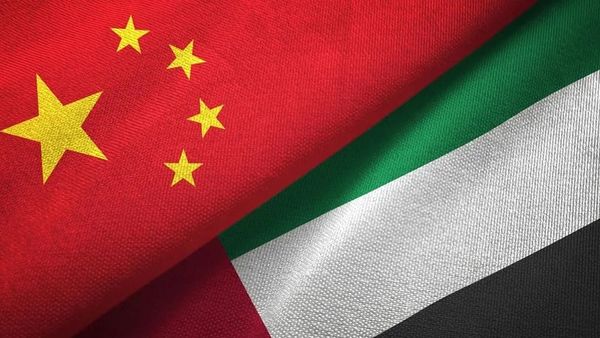
After selling my company, I looked for a new challenge—and for the same sense of energy, ambition, and possibility that had drawn me to China. When I first visited Abu Dhabi, I felt that immediately. I was struck by the clarity of its vision, the pace of its development and the ecosystem being created to support entrepreneurs and new businesses. That combination of long-term ambition and entrepreneurial opportunity is a major reason I am based in Abu Dhabi today.
There are parallels in luxury, too. China taught me that the most exciting markets do not simply adopt established definitions of luxury; they begin to shape their own. Abu Dhabi is already developing a distinctive luxury ecosystem, grounded in its own culture, values and ambitions. I am particularly excited by the emergence of local designers, founders and brands. Supporting Chinese creative talent was one of the most rewarding parts of my work in Shanghai, and I hope to play a similar role here.
Abu Dhabi is already developing a distinctive luxury ecosystem, grounded in its own culture, values and ambitions.
A copy-and-paste strategy doesn't travel. The Gulf is not “the next China,” and brands should be wary of treating it that way. Scale, consumer behaviour, cultural context, and the importance of relationships differ, and the Gulf is far from a single, homogeneous market. What China taught me—and what travel does—is to arrive with curiosity, listen carefully, invest in local relationships, and build for the market as it is, rather than as an international brand assumes it to be.
You began your career as a TV journalist in Tokyo, and narrative has shaped your work ever since. Many Western houses still translate their story rather than adapt it. What does genuine cross-cultural storytelling require, and where do brands most often get it wrong?
I originally wanted to be a war correspondent. My career took a rather different turn—I began in financial television in Tokyo before moving into communications and branding—but journalism taught me lessons that have shaped everything I have done since: be curious, listen carefully and understand the context before attempting to tell someone else’s story.
I would gently challenge the idea that Western luxury houses are still simply translating their global narratives. Many are doing an impressive job of creating locally relevant campaigns, collaborations and experiences. We see brands paying much closer attention to regional cultural calendars, from Chinese New Year and the Mid-Autumn Festival in Asia to Ramadan in the Middle East. What is particularly exciting is that these moments are no longer treated purely as local marketing opportunities. They are increasingly part of the global conversation, creating a richer exchange of ideas and influences.
Genuine cross-cultural storytelling, however, requires more than changing the language, casting local talent or adding familiar cultural symbols to a global campaign. It begins with curiosity and listening. Brands need local voices involved at the start of the creative process, not brought in at the end to validate an idea developed elsewhere. The strongest work combines the brand's enduring DNA with a genuine understanding of local culture, rather than letting one overwhelm the other.
You have written that luxury in the UAE is shifting from spectacle to curation. What does that shift mean for founder-led brands, and what must they get right before entering the region?
When I moved to Abu Dhabi, I looked for a platform that could help me understand the people and ideas shaping the region across luxury, fashion, culture and technology. I couldn’t find quite what I was looking for, so I co-founded The Meridio. Through it, I have had the opportunity to interview some extraordinary people and share my own observations about the market.
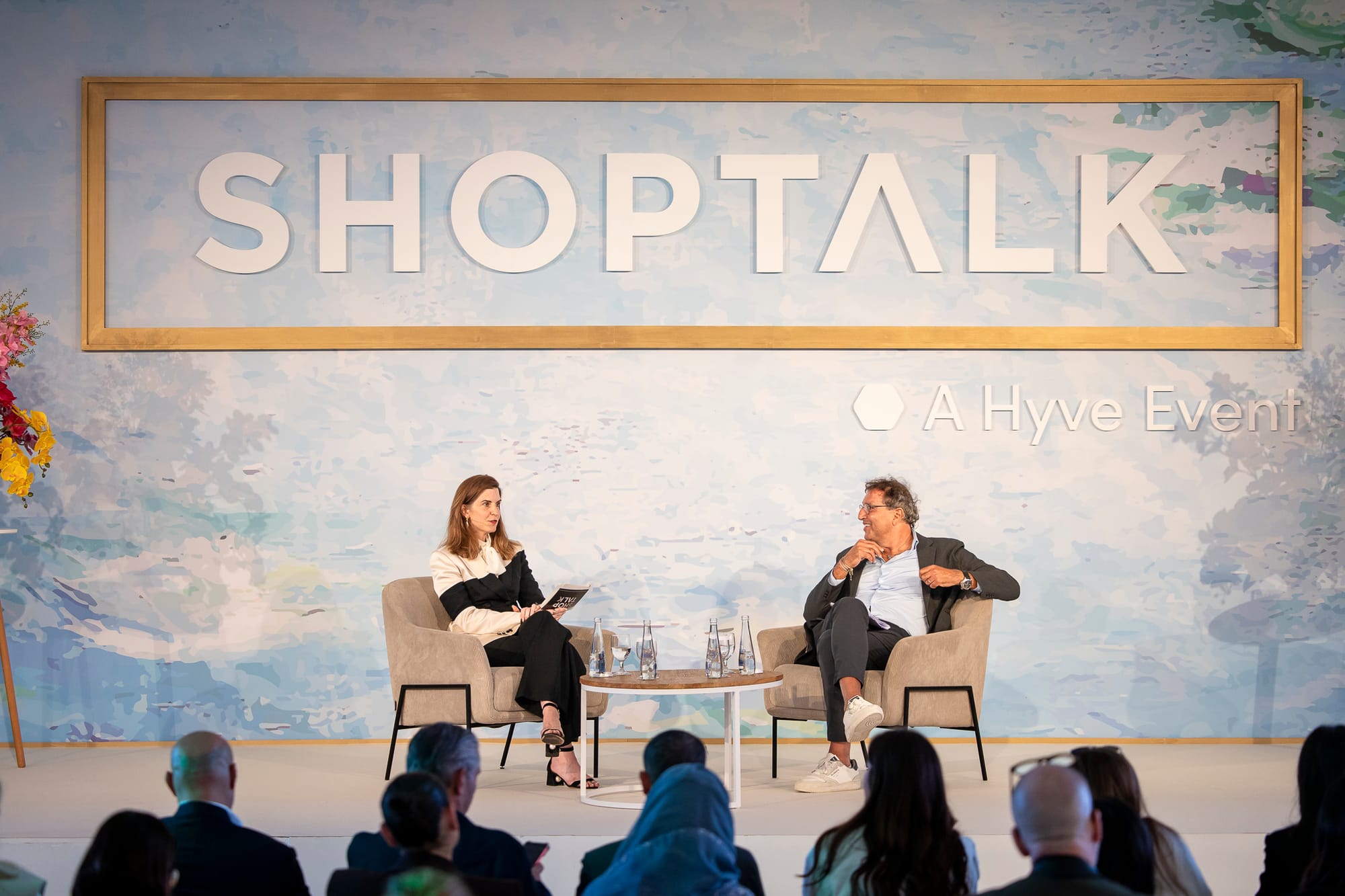
One of those observations is that luxury in the UAE is shifting from spectacle to curation. As consumers spend more time living with luxury, their tastes become increasingly sophisticated and individual. They begin to look beyond the most recognisable logos towards niche brands, exceptional craftsmanship and products that are not readily available everywhere. We are also seeing a broader shift from acquiring products to investing in experiences, whether in hospitality, travel, dining or culture.
I witnessed a similar evolution in China. As the market matured, consumers became more confident in their own tastes and increasingly interested in brands that offered originality, scarcity and a distinctive point of view.
That creates a real opportunity for founder-led brands. Their advantage is often the authenticity of the founder’s vision and their ability to tell a compelling story, move with agility and build genuine communities around shared values. This is particularly relevant in the UAE, where women are highly discerning, influential consumers and powerful community builders.
However, opportunity does not mean automatic success. Brands must understand that the UAE is not simply another market into which they can transplant an existing strategy. They need a clear point of difference, genuine cultural relevance and the right local relationships. That means going far beyond translating a global campaign into Arabic. It requires understanding how people here live, shop, travel and experience luxury, as well as getting the fundamentals—pricing, distribution, service and operational delivery—absolutely right.
The market is receptive to newness, but it is also highly competitive. Founder-led brands that enter with humility, patience and a genuine commitment to the region have a significant opportunity to build something enduring.
You built, scaled and exited Reuter Communications, and now invest in founder-led brands. What do you look for in a founder before you back them?
Having built, scaled and exited my own company, I understand what it takes to build a business—and how slightly mad you have to be to embark on that journey in the first place. I have enormous respect for anyone willing to take that risk.
Today, much of my work at Reuter Ventures involves supporting founder-led brands, and I love working with founders. I understand what drives them: the conviction, resilience and almost obsessive commitment required to turn an idea into a successful business.
I have enormous respect for anyone willing to take that risk.
When I consider an investment, the product and the market opportunity clearly matter, but ultimately, I am investing in the founder. I look for someone with a compelling vision, the resilience to navigate inevitable setbacks and, crucially, the self-awareness to build an exceptional team around them. The best founders know that they cannot do everything themselves. They attract talented people, give them space to succeed and inspire them to believe in the journey.
One of my investments is DeMellier, the handbag brand founded by Mireia Llusia-Lindh. Mireia is an extraordinary entrepreneur with a very clear vision, and it has been wonderful to watch the brand go from strength to strength.
Ultimately, I would rather back an exceptional founder with the ability to evolve than an exceptional product without the right person leading it. Products, markets and strategies will inevitably change. It is the founder’s vision, judgement and ability to bring people with them that determine whether a business can go the distance.
Reuter Ventures advises brands, destinations, and cultural institutions on strategy, collaboration design, and market entry. If you're exploring creative approaches to growth in China or the UAE, get in touch.
Written by