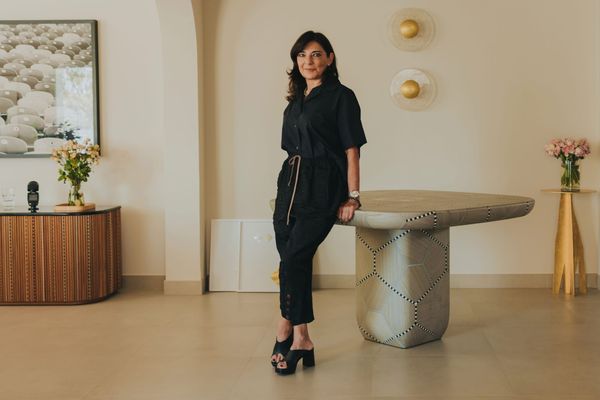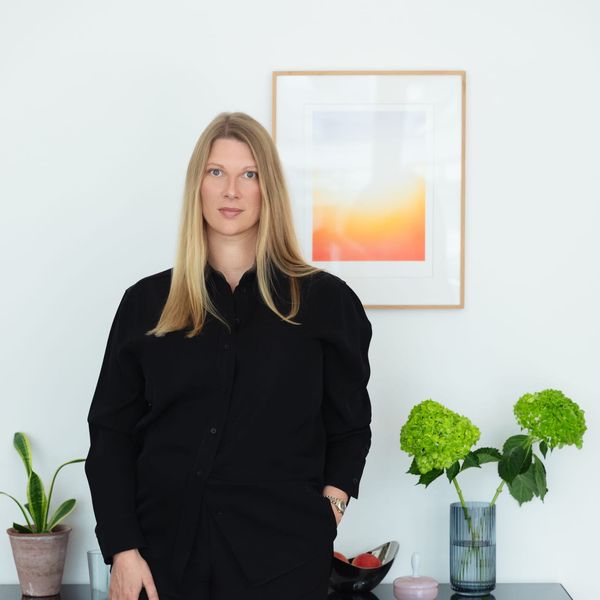
For several years, contemporary design in Dubai often meant modern, minimalist, and Northern European — and, as Mette Degn-Christensen puts it, a lot of beige. This year, Downtown Design is making a deliberate turn towards joy, colour, shape, and form.
Originally from Denmark, Degn-Christensen spent more than a decade in Paris and London before moving to Dubai, where she led Dubai Design Week for five years. As Director of Downtown Design, the fair at the heart of Dubai Design Week, she now oversees its 13th edition, running from 4 to 8 November at Dubai Design District.
In conversation with The Meridio, Degn-Christensen discusses what makes an exhibitor stand out, what makes a collaboration worth staging, and why Dubai gives new ideas room to be tried and built on.
What drew you to Dubai, and how has working here changed your perspective on design?
Originally from Denmark, I’d lived in Paris and London for a little over ten years before moving to Dubai a decade ago. I worked in international PR, bespoke content, and partnerships for design and interiors clients, from Barcelona to Hong Kong and Melbourne. That gave me a broad view of how design scenes develop around the world, and it deepened my interest in the legwork it takes to bring an end result to life.
What drew me here was the chance to help build something, with room to shape it, rather than step into a structure already set in its habits. A design scene that’s still taking form asks a lot of you, and gives a lot back.
It has changed my perspective. I’m less precious about what design ‘should’ look like, and more curious about where ideas come from, where they can go, and what a community can achieve when ambition and openness meet.
How is the UAE’s appetite for design changing, and what are people looking for beyond a recognisable luxury name?
The appetite has matured. A few years ago, a recognisable name was often the shortcut to confidence. Buyers here — end consumers, collectors, and industry professionals alike — are now far more informed, and increasingly confident in their own taste. They travel, they follow design closely, and they want to understand what they’re buying.
There has also been real growth in how design itself is understood and respected. Only ten years ago, it was often seen as unnecessary — ‘just functional’, and therefore unimportant — or mistaken for fashion or graphic design.
During my five years at the helm of Dubai Design Week, before moving on to grow Downtown Design into what it is today, we put considerable effort into showing what design is and what it can do, sparking interest across all ages and experience levels. It has made a real difference.
What people look for beyond a name is a point of view: the story behind a piece, who made it and how, the quality of the craftsmanship and materials, and whether it suits how they actually live. There’s also growing interest in discovering something that isn’t available everywhere, whether that’s a studio they haven’t encountered before or a piece they can commission. Well-known houses still matter, but the work that resonates is the work with something to say.
What makes a project or exhibitor stand out to you, and which discovery captures what excites you about this edition?
Quality, intention, and context are the baseline. What makes a project stand out is a distinct point of view and a clear reason to be at Downtown Design now — and presentation matters as much as the product.
This edition follows several years of pushing contemporary design, which has often meant modern, minimalist, and Northern European — and, as such, a lot of beige. Now we’re seeing the need for a flip, much like the Memphis movement itself, and an appetite for joy, colour, shape, and form: work that is vibrant and playful. That’s what we’re bringing to the forefront this year.
The Memphis Milano pop-up revisits the radical 1980s movement that challenged conventional ideas of taste, and Yinka Ilori’s Clicquot Café brings his unmistakable use of colour and pattern into an environment you can step into. Seeing ideas like these land, and shift how people think about design, is the most rewarding part of the job.
What distinguishes the work in this year’s UAE Designer Exhibition, and what do these designers need to turn exposure into lasting businesses?
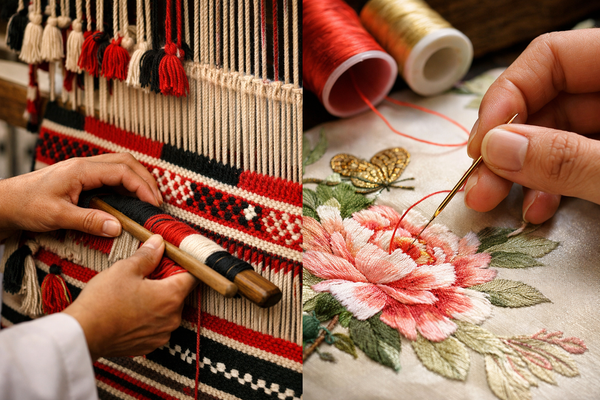
What distinguishes the work this year is how it approaches heritage. Under the theme Inherited Futures, led by architect and designer AlZaina Lootah, 30 designers based and practising in the UAE look at the materials, rituals, and ways of making that have shaped design here, and reinterpret them through a very contemporary lens. Many of them wouldn’t otherwise have this exposure. The exhibition itself is built predominantly from recycled materials, including textiles from OKSAN, a circular ecosystem that turns textile waste into new products.
To turn that visibility into lasting businesses, designers need more than a stage. They need mentorship, access to production and manufacturing, and real commercial opportunities, so they can build sustainable practices and careers from within the region.
What makes a creative collaboration compelling to you, and how do you choose experiences that offer more than a brand showcase?
A collaboration is compelling when each side brings something the other wouldn’t have arrived at alone. Buccellati’s craftsmanship and Luke Edward Hall’s playful eye make Aquae Mirabiles very different to their pop-up here last year.
We choose experiences built around a clear concept rather than a display of product, so visitors leave with an idea or a story, not just a name.
What are you most excited about for Dubai’s design scene?
What’s always exciting is thinking about what’s next, and that’s easy to do in a place with such a go-getter attitude. Dubai is ambitious, and it supports growth and forward movement, so ideas get room to be tried and built on.
For me, it remains important to keep building on the connectivity that Downtown Design stands for, and to continue developing the contemporary design scene in Dubai and the wider region through the lens of the fair. That’s why a key component each year is a mix of returning and new exhibitors, from renowned international brands and designers to emerging regional studios, so Downtown Design stays a place of curiosity and discovery for every visitor.
I’m most excited to see what the next generation of designers does with that access, as confident practices take shape here and start to travel.
ABOUT METTE DEGN-CHRISTENSEN
Mette Degn-Christensen is Director of Downtown Design, the fair at the centre of Dubai Design Week, held annually at Dubai Design District. She shapes each edition’s programme of exhibitors, installations, and collaborations, bringing international brands and designers together with emerging studios from the UAE and the wider region.
Originally from Denmark, Degn-Christensen spent more than a decade based between Paris and London, working in international PR, strategic communications, and content for clients across design, architecture, and interiors. She moved to Dubai in the mid-2010s and led Dubai Design Week, organised by Art Dubai Group, for five years before taking on Downtown Design. Her career spans global communications, content creation, and the running of international design events and fairs.
Written by